South Carolina CPA CPE Requirements
South Carolina CPAs must complete 40 hours of continuing professional education each year for license renewal. At least 2 of those hours must be in ethics during each annual reporting period. South Carolina now requires licensees to submit CPE documentation through the NASBA CPE Audit Service beginning with the 2025 calendar year.
This guide explains South Carolina CPA CPE requirements for license renewal, including the annual reporting period, ethics requirement, carryover rules, webinar and self-study treatment, documentation rules, and nonresident ethics considerations.
This page provides general educational information to help certified public accountants understand how South Carolina determines CPA CPE requirements for license renewal, including annual reporting periods, ethics requirements, carryover rules, documentation expectations, NASBA CPE Audit Service reporting, and nonresident considerations.
South Carolina CPA CPE Requirements at a Glance
The chart below summarizes the core CPE requirements every SC CPA should know:
License Renewal Date and CPE Reporting Period
South Carolina uses a calendar-year CPE cycle. The Board’s current CPE page says the NASBA CPE Audit Service applies to the 2025 calendar year, defined as January 1 through December 31, and that CPE documentation must be reported by February 1, 2026. The FAQ page separately states the license renewal deadline is February 1 at 11:59 p.m.
South Carolina CPA Continuing Education Requirements for License Renewal
South Carolina requires 40 hours of applicable CPE each calendar year. At least 2 of those hours must be in ethics and included within the annual 40-hour total.
Ethics Requirement
South Carolina requires 2 hours of ethics each annual reporting period. Since calendar year 2022, the Board has not required a specific South Carolina ethics course. Licensees may satisfy the requirement with behavioral or regulatory ethics courses that meet the regulation.
Self-Study and Webinar Rules
South Carolina requires self-study certificates to be uploaded with the reporting process described in the FAQ. Webinars count as live CPE when they are interactive and participants are required to respond periodically to confirm attendance. Static or passive webinar rebroadcasts do not qualify as live CPE.
Carryover
Licensees may carry over up to 20 hours of CPE each year. Licensees in retired status may carry over only 10 hours. NASBA’s South Carolina summary also notes that no carryover is allowed from a year in which continuing professional education was not required.
Reporting and Documentation
South Carolina now requires CPE documentation to be submitted through the NASBA CPE Audit Service starting with the 2025 calendar year. Licensees are responsible for accurate reporting and must retain appropriate documentation for five years.
First Reporting Period / Newly Licensed CPAs
I did not find a clearly surfaced official first-renewal exemption or reduced-hour rule in the materials reviewed here, so this section should stay conservative unless you want me to do a deeper source pass in the South Carolina code and regulations.
Nonresident CPAs
If a South Carolina licensee’s principal place of business is outside South Carolina, the licensee may use the ethics course for that other state to fulfill South Carolina’s ethics requirement if that state requires an ethics course. If the licensee does not hold an active license in the state of the principal place of business, South Carolina’s ethics requirement still applies. NASBA’s South Carolina summary also says out-of-state CPAs may meet South Carolina’s CPE requirements by meeting the requirements of their principal place of business, provided that jurisdiction has an ethics requirement.
South Carolina CPA CPE Courses: What to Know
South Carolina allows a range of qualifying CPE formats, but the key practical points are that the education must be applicable, webinars must be interactive to count as live credit, and self-study documentation must be retained and reported properly.
Audio-Based Self-Study and LumiQ
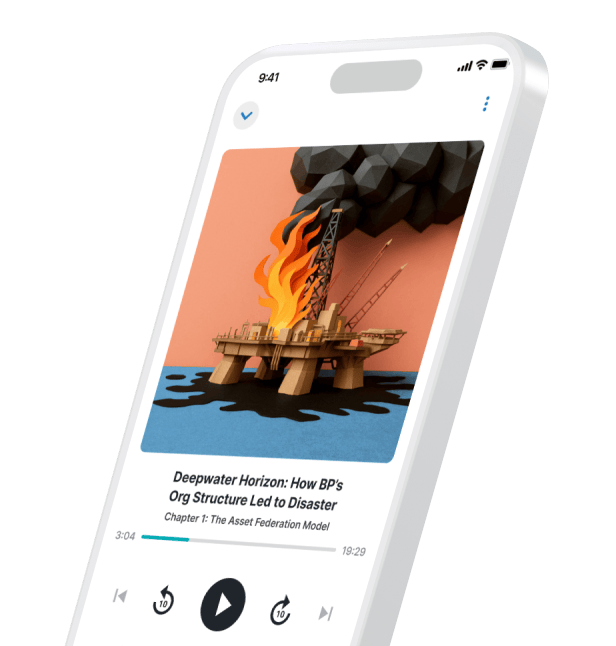
LumiQ provides CPE credits in an audio-based self-study format designed to support South Carolina CPAs through accessible, on-demand learning. While often described as a “CPE podcast,” LumiQ episodes are structured educational programs intended to align with South Carolina CPA CPE requirements when completed and documented in accordance with state rules. Licensees remain responsible for making sure any course they complete fits South Carolina’s annual reporting requirements, ethics requirement, and documentation rules.
CPAs remain responsible for:
- Meeting South Carolina’s 40-hour annual CPE requirement
- Completing 2 hours of ethics each year
- Reporting documentation through the NASBA CPE Audit Service
- Uploading required self-study documentation
- Keeping supporting records for five years
LumiQ does not determine a licensee’s individual South Carolina CPA license renewal obligations and does not provide legal, regulatory, or individualized compliance advice.
South Carolina CPA License Renewal
The South Carolina Board of Accountancy and South Carolina LLR are the final authorities on South Carolina CPA license renewal and continuing education compliance. Licensees should treat current statutes, regulations, renewal materials, and Board guidance as controlling.
Reviewed by Danielle Marion, Regulatory Compliance Manager at LumiQ. Danielle has more than 20 years of experience in regulatory compliance and professional education governance, including leadership roles at Deloitte LLP.
LumiQ Inc. Sponsor ID Numbers: NASBA (146039), New York (002996), Texas (010643)
LumiQ’s subject matter classifications are made in accordance with NASBA’s Fields of Study that qualify for Continuing Professional Education.
Each State Board of Accountancy retains final authority on the acceptance of individual episodes, credit hours, and the classification of fields of study for CPE purposes.