FAQs about Cryptocurrency CPE.

Try LumiQ for freeYes. These courses are designed for CPAs and finance professionals who need to understand cryptocurrency accounting, digital asset financial reporting, and the tax implications of crypto transactions. Course content draws on U.S. GAAP, FASB guidance, and IRS rules governing digital assets.
Cryptocurrency CPE courses commonly cover topics such as:
• Cryptocurrency fundamentals and blockchain technology
• Accounting for digital assets under U.S. GAAP
• Financial reporting for Bitcoin, Ethereum, and other crypto assets
• Non-fungible tokens (NFTs) and their accounting treatment
• Stablecoins and decentralized finance (DeFi)
• Tax implications of cryptocurrency transactions, including cost basis tracking
• Smart contracts and their accounting and audit implications
• Initial coin offerings (ICOs) and token issuance
• Auditing and internal controls in a digital asset environment
Under current U.S. GAAP, most cryptocurrencies such as Bitcoin and Ethereum are classified as indefinite-lived intangible assets. Historically, this meant companies recognized impairment losses when the fair value of a crypto asset declined below its carrying value, but could not mark assets up for subsequent price increases. In 2023, the FASB issued ASU 2023-08, which requires entities to measure certain crypto assets at fair value each reporting period, with changes recognized in net income. Understanding the current accounting standards for digital assets is a core competency for CPAs advising or auditing clients with cryptocurrency holdings.
The IRS treats cryptocurrency as property for U.S. federal income tax purposes. This means that most cryptocurrency transactions, including sales, exchanges, and payments for goods and services, may trigger taxable events. Key tax considerations include tracking cost basis, recognizing capital gains and losses, reporting requirements for staking and mining income, and the treatment of hard forks and airdrops. CPAs advising clients with crypto assets must understand these rules to ensure accurate reporting and compliance.
These three categories of digital assets each present distinct accounting and tax considerations:
• Stablecoins are digital assets pegged to a reference asset such as the U.S. dollar. Their accounting treatment depends on the specific structure and may differ from other crypto assets.
• Non-fungible tokens (NFTs) are unique digital assets recorded on a blockchain. Their accounting treatment varies based on the purpose for which they are held and the nature of the rights they represent.
• Decentralized finance (DeFi) involves blockchain-based financial protocols that enable lending, borrowing, and trading without traditional intermediaries. DeFi transactions often involve complex tax and accounting considerations, including treatment of liquidity pool activity and yield farming.
There are no formal prerequisites. However, some advanced topics, such as DeFi accounting, smart contract auditing, or the detailed tax treatment of complex crypto transactions, may assume familiarity with general accounting, taxation, or finance concepts.
Podcasts can deliver superior learning outcomes compared to live webinars and recorded webcasts. Audio-only formats reduce cognitive overload and "Zoom fatigue," allowing your brain to retain information better. Additionally, unlike live or in-person options, you can pause and replay complex blockchain and digital asset concepts as needed for comprehension.
Podcasts also fit your schedule and your life better. Unlike live webinars with fixed start times, podcasts let you earn CPE during your commute, between clients, or whenever works best.
In short, you get the same credit hours with better retention and zero scheduling conflicts.
CPE credits vary by course. Typically they range from 1 to 2 hours per podcast and 3 to 9 hours for our in-depth, multi-episode learning paths. Each course listing clearly displays the credits you'll earn upon completion. All credits are earned once you complete the podcast episode in full and pass the final assessment.
LumiQ is registered with the National Association of State Boards of Accountancy (NASBA) in the U.S. as a CPE sponsor (Sponsor ID: 146039). Courses completed through NASBA-registered sponsors are generally accepted by U.S. boards of accountancy, subject to each state board’s specific CPE requirements.
LumiQ's QAS self-study cryptocurrency courses are classified under NASBA's Specialized Knowledge field of study and provide CPE credit hours upon completion. Your certificate of completion documents the course, field of study, and credit hours earned.
Because CPE requirements and acceptance ultimately vary by state and by licensee circumstances, CPAs are responsible for confirming that a specific course meets their state board's renewal requirements
Yes. With a LumiQ account you have access to the CPE Tracker. LumiQ Tracker automatically tracks the CPE you earn with LumiQ, and you can download certificates of completion at any time.
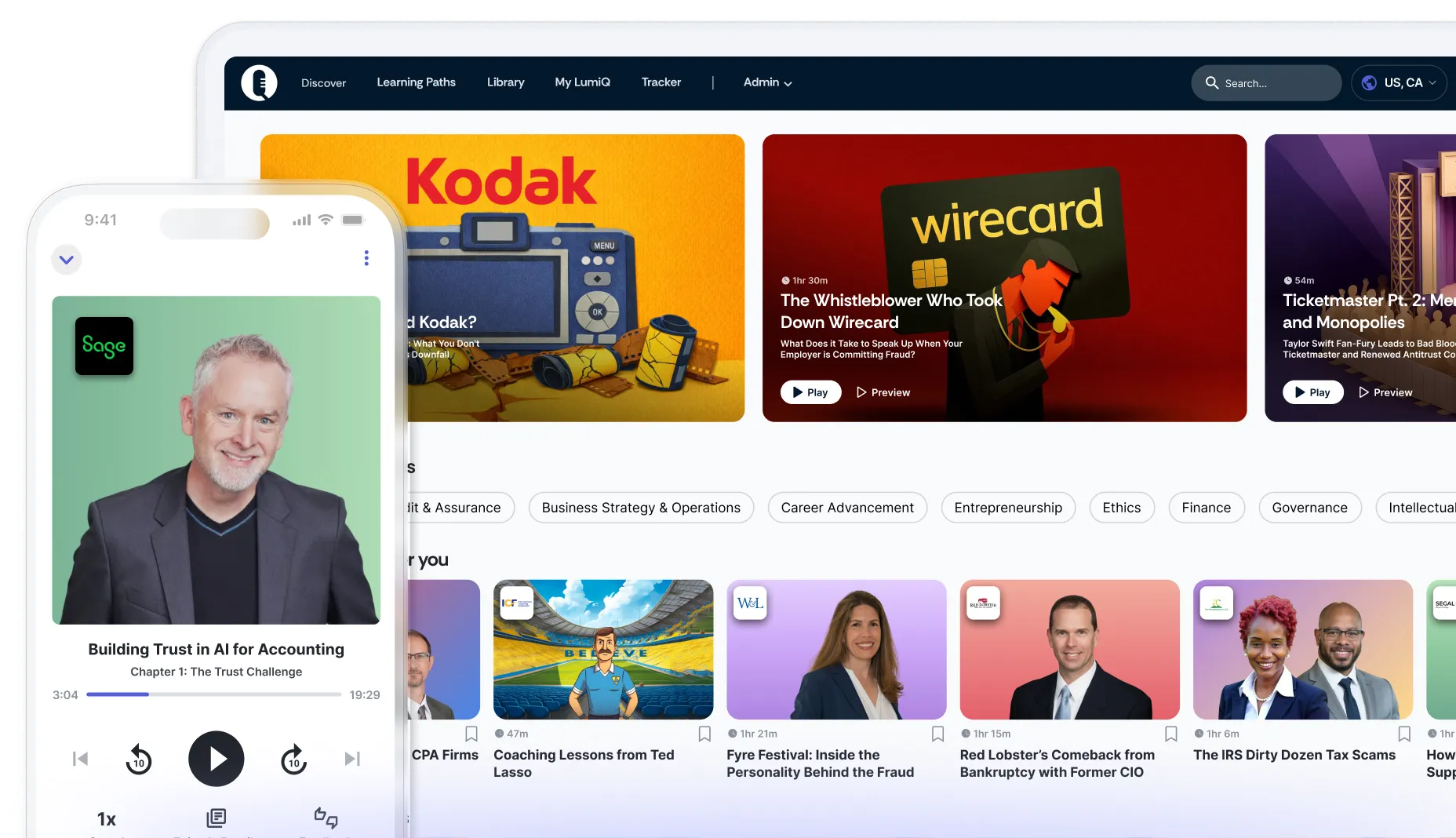
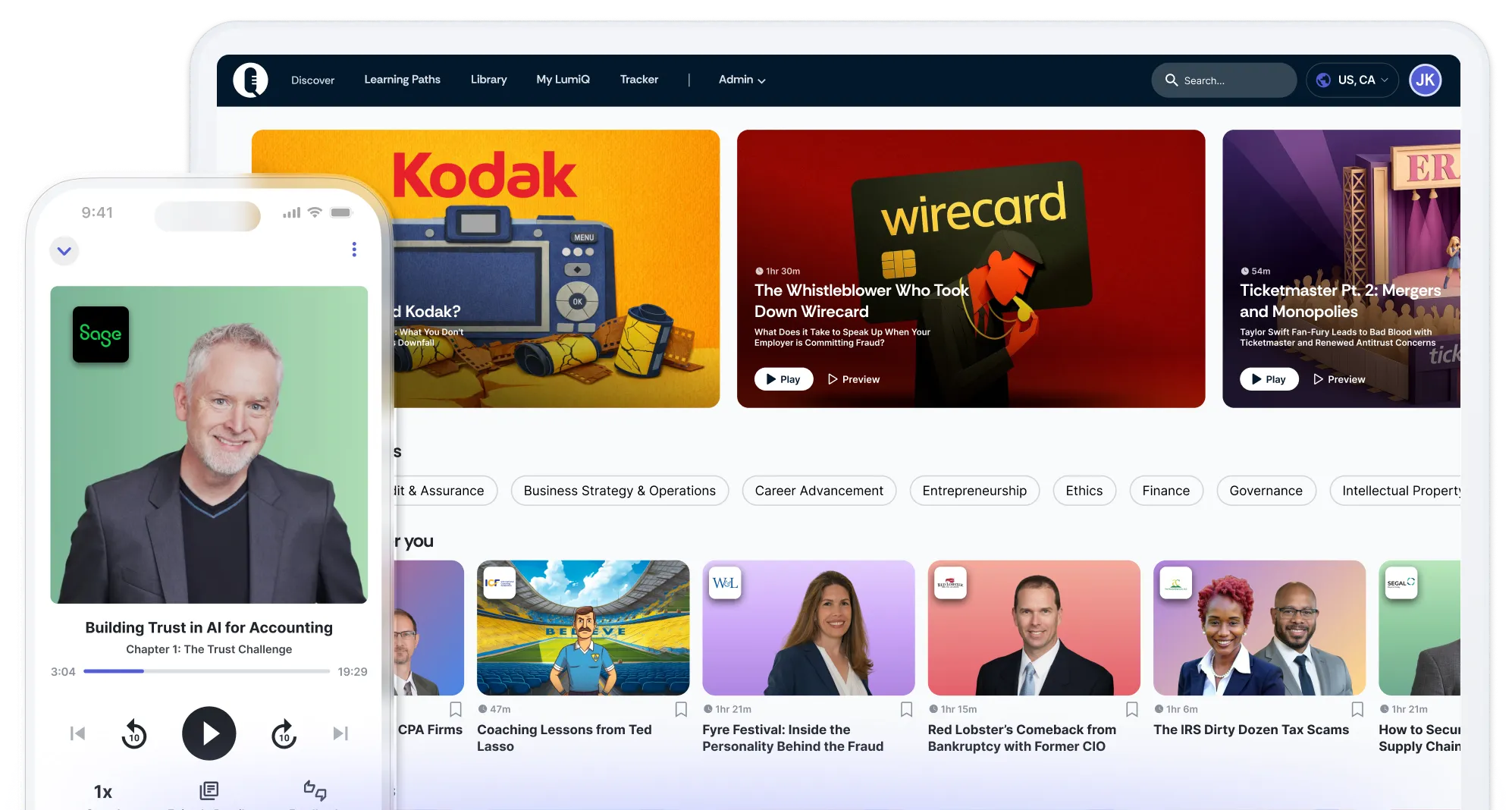
Yes. LumiQ works on mobile. We have an app for both Apple and Android devices so you can complete on-demand CPE during your commute, workout, or whenever it fits your schedule.
Click here to go to the Google Play Store and click here to go to the Apple App Store.
Yes! Sign up for a free trial today and get 3 NASBA-approved CPE credits, no credit card required. To purchase a full subscription, visit our pricing page. If you work for a company with a team of CPAs, or others who may be interested, contact us for team pricing options.


.png)

.png)