Common questions about CFE CPE.
Try LumiQ for freeCFEs must earn 20 CPE credits during each 12-month CPE compliance period. Of those 20 credits, at least 10 must be fraud-related (detection and deterrence of fraud) and at least 2 must be ethics-related. The remaining credits can be earned through general CPE that meets NASBA's field-of-study standards. A single course can be dual-designated to satisfy both the fraud and ethics minimums at once. Requirements may change; confirm current figures with the ACFE.
The ACFE uses an anniversary-month reporting cycle: your compliance is certified by the end of your CFE "anniversary month," which typically lines up with your ACFE membership renewal month. New CFEs are exempt from reporting CPE from the date of certification through their next anniversary month, with the first full 12-month cycle beginning the following month. Confirm your specific anniversary month and cycle dates with the ACFE.
CFEs self-certify their CPE compliance online on ACFE.com, by phone, or via secure chat. The ACFE does not automatically collect your records; you attest that you have met the requirement. If you are selected for a random Compliance Audit, be prepared to submit documentation.
CFEs who need more time can request a 30-day grace period extension, with further case-by-case extensions possible afterward. If the requirement still isn't met without an approved extension, the CFE is suspended: you cannot use the CFE credential (on business cards, resumes, websites, etc.), cannot vote in ACFE elections, and are removed from the "Find a CFE" directory. To resolve a suspension you must complete the full 20 credits (10 fraud plus 2 ethics) for each suspended year and reactivate through MyCPE, by phone, or with a Reactivation Application. CFEs suspended for 5 or more cumulative years are converted to Associate status and must retake the CFE Exam to reinstate. Confirm current grace-period and reactivation procedures with the ACFE.
CFEs should retain CPE documentation, such as certificates of completion, for 3 years in case of a random ACFE Compliance Audit. Acceptable records must show your name, a course description, the sponsoring organization, credits earned, and the course date; registration forms, invoices, syllabi, slides, and spreadsheets alone are not accepted. The ACFE does not maintain your CPE history for you (aside from its own purchase records), so tracking your own credits is your responsibility.
No. The ACFE accepts CPE from other organizations and institutions, not just ACFE-branded programs, as long as the activity is an accepted CPE type (such as self-study or participant credit) and the content maps to the fraud body of knowledge covered in the Fraud Examiners Manual, an ethics-related topic, or otherwise qualifies as general CPE under NASBA's field-of-study standards. Self-study courses must include a final exam and a compliant certificate of completion. Confirm with the ACFE that a specific non-ACFE course fits your compliance plan.
LumiQ is registered with the National Association of State Boards of Accountancy (NASBA) as a QAS self-study CPE sponsor (Sponsor ID: 146039). The ACFE's own published CPE policies do not specifically name podcasts as a qualifying format, so this should be treated as a reasonable inference rather than an ACFE endorsement: a self-study podcast course from a NASBA-registered sponsor would need to meet the same requirements as any other self-study activity, including a final assessment and a compliant certificate documenting the course, sponsor, credits, and date. LumiQ's ethics and fraud-focused episodes are designed to align with the fraud body of knowledge and ethics topics recognized in the ACFE's Acceptable Fields of Study. CFEs are responsible for confirming with the ACFE that any specific LumiQ course satisfies their individual CPE requirements before relying on it for compliance.
Podcasts can deliver superior learning outcomes compared to live webinars and recorded webcasts. Audio-only formats reduce cognitive overload and "Zoom fatigue," allowing your brain to retain information better. Additionally, unlike live or in-person options, you can pause and replay complex fraud schemes and case details as needed for comprehension.
Podcasts also fit your schedule and your life better. Unlike live webinars with fixed start times, podcasts let you earn CPE during your commute, between client engagements, or whenever works best.
In short, you get the same credit hours with better retention and zero scheduling conflicts.
CPE credits vary by course. Typically they range from 1 to 2 hours per podcast and 3 to 9 hours for our in-depth, multi-episode learning paths. Each course listing clearly displays the credits you'll earn upon completion. All credits are earned once you complete the podcast episode in full and pass the final assessment.
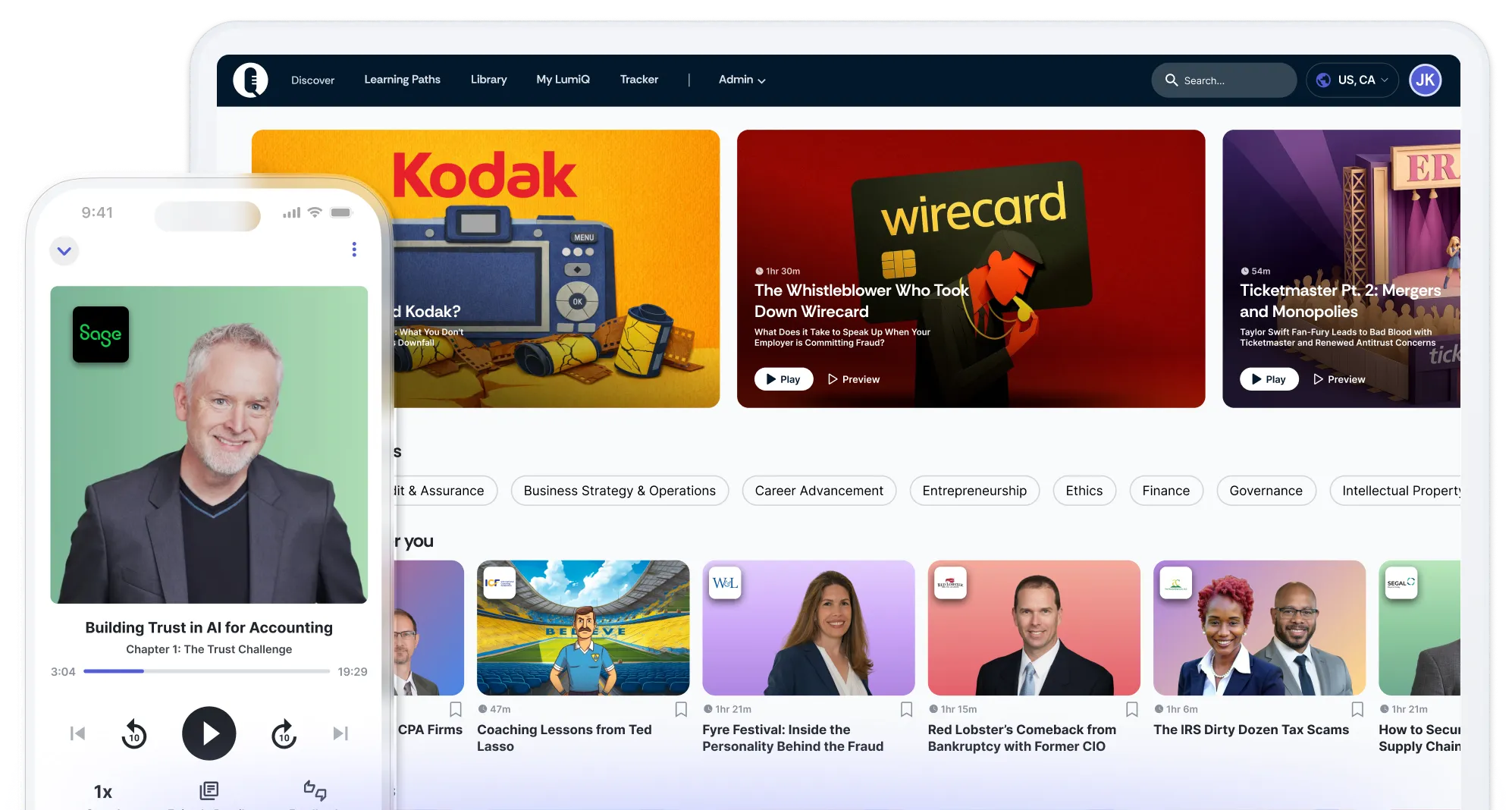
Yes. With a LumiQ account you have access to the CPE Tracker. LumiQ Tracker automatically tracks the CPE you earn with LumiQ. Certificates of completion can be downloaded at any time.
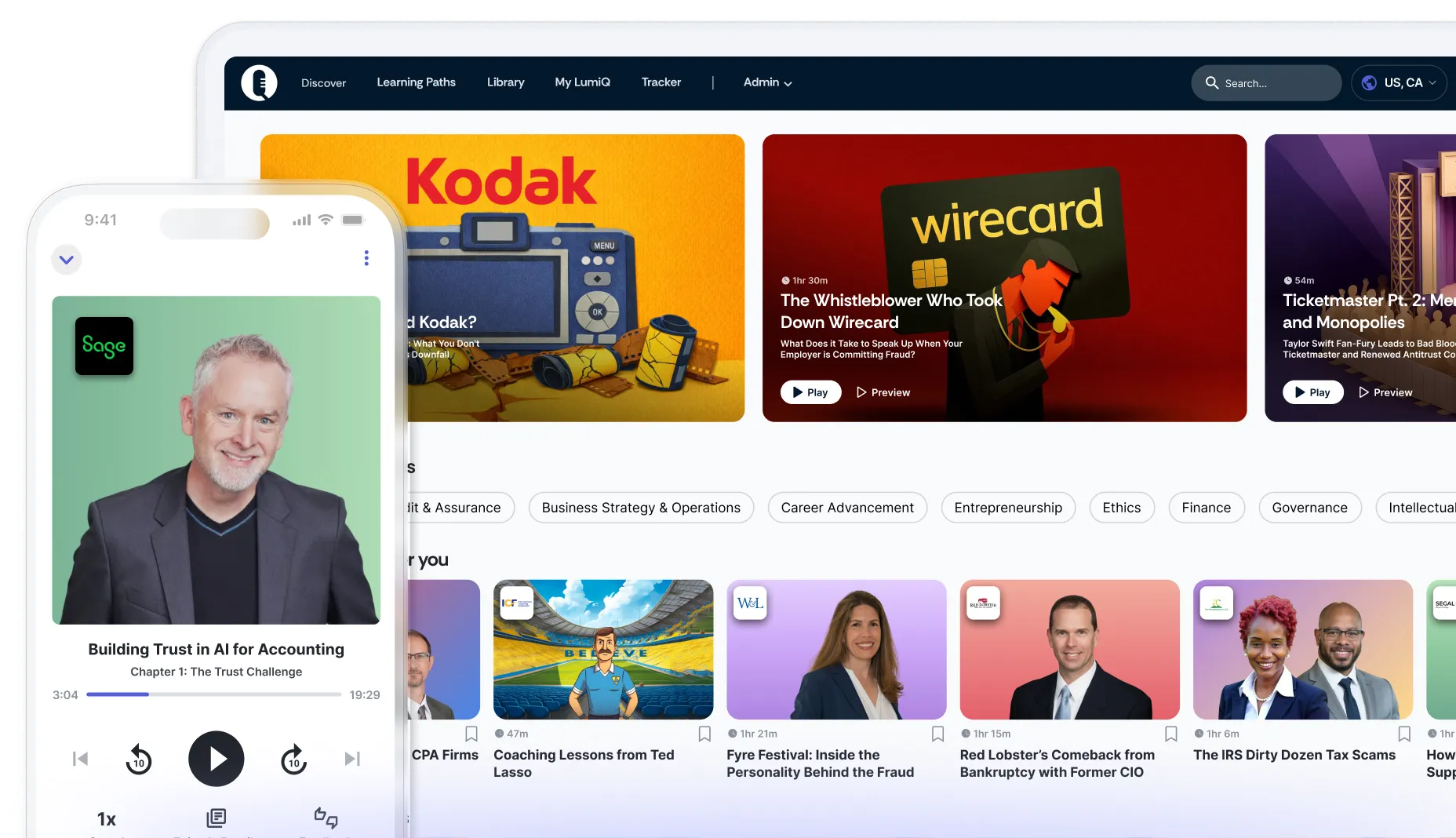
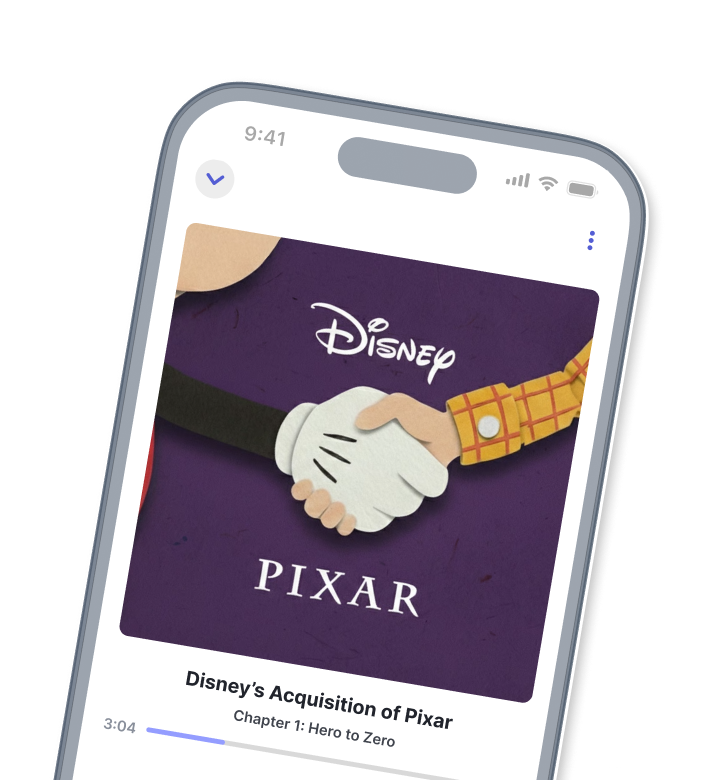
Yes. LumiQ works on mobile. We have an app for both Apple and Android devices so you can complete on-demand CPE during your commute, workout, or whenever it fits your schedule.
Click here to go to the Google Play Store and click here to go to the Apple App Store.
Yes! Sign up for a free trial today and get 3 NASBA-approved CPE credits, no credit card required. To purchase a full subscription, visit our pricing page. If you work for a company with a team of internal auditors, or others who may be interested, contact us for team pricing options.


.png)

.png)

.png)