CIA CPE Requirements: Global Certification Renewal Guide
Practicing Certified Internal Auditors need 40 continuing professional education hours each calendar year. Non-practicing CIAs need 20 hours, while retired CIAs have no annual CPE requirement for as long as they remain retired. Practicing and non-practicing holders must also complete 2 ethics hours annually, renew through The Institute of Internal Auditors by 31 December, indicate whether they conform with the Global Internal Audit Standards, and attest to The IIA’s Standards of Ethics and Professionalism.
The Institute of Internal Auditors (IIA) uses the term continuing professional education (CPE) for maintaining CIA certification. However, in jurisdictions such as Canada and the United Kingdom, professional organizations and educational providers often refer to this ongoing learning as continuing professional development (CPD). The IIA also references learning opportunities offering “CPE/CPD credits”. Ultimately, compliance depends on whether an activity satisfies The IIA's criteria regarding relevance, quality, measurement, and proper documentation.
This page provides general educational information about CIA CPE requirements, global CPE and CPD terminology, annual renewal, ethics, qualifying learning, self-study, documentation, and CPE audits.
Important: This content does not constitute legal, regulatory, or individualized compliance advice and does not replace The IIA’s Annual Certification Renewal Policy or instructions issued through the Certification Candidate Management System. Individual requirements may vary based on certification status, location, other credentials held, and hardship circumstances.
CIA Continuing Professional Education (CPE) Framework at a Glance
| Certification Status | Annual CPE Requirement | Ethics Requirement |
| Practicing CIA (actively engaged in internal audit) | 40 hours | 2 hours |
| Non-Practicing CIA | 20 hours | 2 hours |

Understanding CPE for Global CIA Credentials
The CIA certification program is recognized globally, with The IIA designating Continuing Professional Education (CPE) as the official metric for annual maintenance. However, terminology varies across different professional organizations and regions:
- U.S. accounting boards and professional bodies typically use CPE.
- Canadian CPA organizations generally utilize Continuing Professional Development (CPD).
- UK-based professional bodies standardly refer to CPD.
- International educational providers may grant certificates referencing CPE, CPD, or both, depending on the recipient's credentials and geographic location.
The designation on a certificate does not solely dictate its validity for certification. A CPD-designated course can fulfill CIA renewal requirements provided it satisfies The IIA's standard criteria. Conversely, a course designated as CPE will not qualify if it fails to enhance internal audit competencies or lacks adequate proof of completion.
While The IIA's active learning resources frequently cite both terms in reference to professional development credits, the official renewal policy explicitly defines CIA maintenance requirements in CPE hours.
[[CTA1]]
[[CTA2]]
[[CTA3]]
Canadian and UK CPD Credits Can Apply Toward CIA CPE
Professional learning completed in Canada, the UK, or other international jurisdictions can be applied toward CIA certification renewal, provided the course satisfies The IIA's standards for acceptable educational programs.
To qualify, the educational program must meet the following criteria:
- Serve as a formal educational activity that directly enhances professional competence.
- Clearly outline defined learning objectives.
- Specify prerequisites whenever applicable.
- Be designed by qualified subject-matter experts and instructional design specialists.
- Incorporate up-to-date subject matter.
- Offer verifiable proof of completion or participation.
- Accurately log the total amount of learning time.
The IIA accepts qualifying education from a variety of sources, including accounting and auditing bodies, external professional associations, employers, academic institutions, trade organizations, and structured self-study providers. Courses do not need to be purchased directly from The IIA.
As a result, Canadian or UK professionals can use CPD-labeled activities toward their CIA renewal, provided the content remains relevant to internal audit practice and complies with these documentation and program requirements.
Practicing, Non-practicing, and Retired CIA Status
The number of CIA CPE hours required depends on your certification status.
Practicing CIA
A practicing CIA actively performs internal audit or related work and needs 40 CPE hours annually. Related work may include roles involving assurance, risk, governance, control, compliance, internal audit leadership, or other responsibilities closely connected with internal auditing. If your work status is unclear, review The IIA’s policy or submit a support case through CCMS.
Non-practicing CIA
A nonpracticing CIA is not retired but is not actively performing internal audit or related activities. Nonpracticing CIAs need 20 CPE hours annually. Nonpracticing holders can continue using the CIA designation while the certification remains active.
Retired CIA
A retired CIA is no longer in the workforce and has no annual CPE or renewal requirement while remaining retired. The certification must be active before it can be moved into retired status, and the holder must request the status change through CCMS. The IIA may audit retired-status declarations.
Annual CIA Ethics Requirement
Every calendar year, both practicing and non-practicing CIAs are required to fulfill 2 CPE hours of ethics training.
The IIA allows CIAs to source ethics courses from any provider, provided the training satisfies the following criteria:
- Maintains a direct focus on ethics
- Is completed during the applicable annual reporting cycle
- Is backed by proper supporting documentation
These 2 ethics hours are included within, rather than added to, the CIA’s total annual CPE requirement.
Qualifying ethics subject areas include:
- Integrity and professional behavior
- Objectivity
- Confidentiality
- Managing conflicts of interest
- Ethical decision-making framework
- Demonstrating professional courage
- Fraud and misconduct analyzed through an ethical lens
- Fostering an ethical culture within organizations
- Ethical considerations in technology and data usage
Note: Courses focused on fraud, compliance, or governance cannot automatically be credited as ethics CPE unless ethics serves as a primary learning objective and core topic of the curriculum.
Global Internal Audit Standards and Annual CIA Renewal
Standard 3.2 of the Global Internal Audit Standards highlights continuing professional development under the broader requirement for auditors to preserve and advance their professional skills.
As part of annual CIA certification renewal, credential holders must also:
- Review the Global Internal Audit Standards.
- Declare annually whether their internal audit services conform to these Standards.
- Confirm their adherence to The IIA’s Standards of Ethics and Professionalism.
Indicating nonconformance during annual renewal does not result in automatic deactivation of the CIA credential; however, responses must be completely truthful.
While the Standards and annual renewal obligations complement each other, earning 40 CPE hours does not independently guarantee full conformance with every Global Internal Audit Standard.
CIA CPE Reporting Period and Renewal Deadline
The reporting period for CIA certification aligns with the calendar year, spanning from 1 January to 31 December.
The annual renewal window in CCMS opens on 1 October and runs through 31 December. Credential holders may renew their certification at any point before the end of the year, provided all relevant criteria have been satisfied.
To renew, CIA holders must self-attest that they have fulfilled the following key requirements:
- Completion of the designated CPE hours
- Completion of 2 hours dedicated to ethics
- Submission of the Standards conformance declaration
- Attestation to the Standards of Ethics and Professionalism
- Payment of the annual renewal fee
Applicable renewal fees depend on factors such as geographic location, membership standing, active certifications, and whether processing occurs via CCMS or a local national institute.
First Renewal for Newly Certified CIAs
The initial reporting window for a newly credentialed CIA runs from the date certification is granted through December 31 of the next calendar year.
For instance, an individual earning their designation in February 2026 can start accumulating eligible CPE credits right away, but their first annual renewal is not due until December 31, 2027.
Best practices for new designees include:
- Verify your specific initial renewal deadline directly within CCMS.
- Start retaining CPE compliance records immediately upon receiving certification.
- Fulfill the mandatory ethics course requirements inside the first reporting cycle.
- Check CCMS records first rather than assuming a standard calendar-year schedule applies.
Note: CIA holders located in Korea and Japan may have distinct renewal schedules coordinated through their regional institutes.
Determining What Counts as CIA CPE
Formal education and structured CPE courses represent the primary pathway for acquiring CIA CPE credits. Under IIA guidelines, individuals can fulfill their complete annual requirement via approved educational offerings, provided each program enhances professional knowledge and aligns with internal audit practices, the CIA syllabus, or a designated domain of expertise.
Eligible program formats encompass:
- Live webinars and interactive seminars
- Professional conferences and technical sessions
- Structured self-study and formal online instruction
- Academic coursework from colleges and universities
- Corporate and employer-led training initiatives
- Industry-specific educational offerings
- Guided audio-based learning programs
- Programs sponsored by recognized professional associations
Subject Areas That Qualify for CIA CPE
The IIA recommends that CIA credential holders choose educational activities aligned with the current CIA exam syllabus and the broader global internal audit body of knowledge.
Eligible subject areas encompass:
- Core Audit Practices & Execution: internal audit fundamentals, audit planning, engagement performance, reporting and communication, quality assurance and improvement, and professional ethics
- Governance, Risk & Compliance: governance, enterprise risk management, internal control, regulatory compliance, and fraud risk
- Technology & Data: cybersecurity, information technology auditing, and data analytics
- Business & Leadership Skills: financial management, business acumen, leadership, and stakeholder relationships
Course titles do not explicitly need to contain the phrase "internal audit". Nevertheless, credential holders must be prepared to demonstrate how a specific course enhances skills pertinent to internal audit practice or a related specialized area.
Self-Study and On-Demand Learning Qualify for CPE
The IIA specifically allows self-study and formal correspondence programs applicable to internal auditing, provided they fulfill established educational criteria and offer documentation of completion.
To qualify, a self-study course should feature:
- Defined learning objectives
- Professionally designed and up-to-date content
- A structured educational framework
- A suitable metric for evaluating learning time
- Proof confirming the participant completed the program
Although a final assessment is not strictly required for every program under IIA guidelines, including one provides stronger verification that structured learning was successfully completed.
Podcast and Audio-Based Learning Can Qualify for CIA CPE
Audio-based education can qualify for CIA CPE credit provided it is delivered as a formal professional development program and satisfies The IIA’s standards for quality and documentation.
Simply listening to a general public podcast that covers topics in internal audit, risk, governance, or finance is not sufficient for auto-qualification.
To establish a solid foundation for CIA CPE recognition, a structured audio program should incorporate the following elements:
- Explicitly defined learning objectives
- Applicable professional subject matter
- A specified instructional timeframe
- Mechanisms for tracking completion or active participation
- A formal assessment or verifiable completion check
- An official certificate or verifiable completion record
Ultimately, eligibility is determined not by the delivery medium, but by the program's structure, professional relevance, verified learning duration, and supporting evidence.
Other Ways to Earn CIA CPE
In addition to formal education, CIAs can earn CPE credits through various professional activities, subject to annual limits defined by The IIA:
- Certification Exams: Up to 40 hours (in the year passed).
- Publications, Translations, & Presentations: Up to 25 hours each.
- Subject-Matter Expert Participation & External Quality Assessments: Up to 20 hours each.
Other activities, such as contributing exam questions or guidance, also qualify. Always review activity-specific calculation and documentation requirements before you report CPE hours.
Single Activities Can Count Toward Multiple IIA Certifications
An individual who maintains multiple IIA designations, such as the CIA, CRMA, or CFSA, can apply up to 40 hours of shared learning toward both annual requirements, provided the material directly aligns with the competencies of each credential. However, double-counting is not automatic; every course must be demonstrably relevant to the professional knowledge required for each respective certification.
Can Excess CIA CPE Hours Carry Forward?
Professionals holding multiple IIA credentials (such as the CIA and CRMA) may apply up to 40 hours of common educational activities toward both renewal requirements. However, double-counting is not automatic: each completed course must be demonstrably relevant to the specific competency requirements of every individual credential.
Carrying Over Excess CIA CPE Hours
The IIA allows credential holders to carry forward a limited amount of surplus CPE earned in the immediately preceding reporting period. For instance, a practicing CIA who earns 60 CPE hours in a single year can transfer up to 20 surplus hours to fulfill the following year's requirement.
Key rules for CPE carryforward include:
- Surplus hours can only originate from the directly preceding renewal cycle.
- This provision represents a strict carryover allowance, not a grace period.
- Designees must maintain documentation verifying when the hours were completed, the exact surplus beyond the earlier requirement, and the amount rolled over into the current period.
Managing a CIA CPE Hour Deficit
If you do not complete your required CPE hours by 31 December, refrain from submitting your annual renewal attestation. The IIA allows designees to resolve a shortfall by earning the necessary hours during the following calendar year.
Key rules for resolving a CPE shortfall include:
- Make-up hours must be applied retroactively to the prior deficient period.
- Hours allocated toward a prior deficiency cannot be double-counted toward the current year's CPE requirement.
- Complete your annual renewal only after all prior-year requirements have been fully met.
- Correcting a deficiency is distinct from CPE carryforward, which uses surplus hours accumulated from a previous cycle rather than catching up on missed ones.
Impact of Missed Renewal: Grace and Revoked Status
Failing to complete the annual renewal process by 31 December results in an automatic transition from Active to Grace status.
Restrictions and obligations during Grace status:
- You may not hold yourself out as currently certified.
- You are prohibited from using the CIA designation after your name.
CIA Grace and Revoked Status
Failing to renew a CIA certification by December 31 results in a status change from Active to Grace. While in Grace status, credential holders must observe specific limitations and complete necessary steps to regain active status:
- Do not display the CIA designation after your name.
- Refrain from representing yourself as actively certified.
- Fulfill the outstanding renewal requirements for the prior period.
- Complete the current period's renewal as a separate transaction.
Grace status serves as an inactive certification state due to unfulfilled renewal requirements, not as an extension for earning additional CPE hours. If a credential remains in Grace status for over 24 months, it is subject to revocation. To reinstate a revoked CIA designation, the holder must submit a recertification application, pay required fees, and successfully pass CIA Part 1.
How to Report CIA CPE Through CCMS
Renewing a CIA designation is completed online using The IIA’s Certification Candidate Management System (CCMS).
The general steps to complete renewal include:
- Fulfill your mandatory CPE and ethics credit hours.
- Access CCMS during the active renewal period.
- Choose the option to renew your CIA certification.
- Fill out all required attestations and declarations.
- Remit the necessary renewal fee.
- Finalize and submit the renewal application.
Uploading completion certificates is generally not required during standard annual renewal. Credential holders should retain all documentation, as it will only need to be submitted if selected by The IIA for a CPE audit.
CIA CPE Documentation and Record Retention
Certified Internal Auditors are required to retain all supporting documentation for a minimum of 3 years.
Where applicable, documentation must detail:
- Program description or title
- Subject area covered
- Dates of completion or attendance
- Delivery format or location
- Sponsoring organization
- Number of CPE hours granted
- Independent proof of completion, such as a completion certificate or formal letter
- Relevant documentation for presentations, publications, volunteer efforts, or other approved activities
- While maintaining a personal tracker is helpful for record-keeping, it does not substitute for official proof. Always preserve the certificate issued by the provider or an equivalent independent document.
Understanding the CIA CPE Audit Process
To ensure compliance with continuing education standards, The IIA routinely selects certified individuals for annual CPE audits.
Key steps in the audit workflow include:
- Audit Notification: Selected individuals are notified directly via email.
- Record Request: The IIA asks for supporting documentation for all reported CPE hours during the specified period.
- Document Submission: Credential holders must submit their proof of completion prior to the indicated deadline.
- Policy Evaluation: Submitted records are evaluated against the criteria in the Annual Certification Renewal Policy.
Audit Outcomes & Penalties:
- Status Revocation: Failing to submit requested verification documents can lead to the revocation of your CIA certification.
- Credit Shortfalls: If an audit reveals a deficiency in completed hours, The IIA grants a 6-month extension window to earn and submit the remaining required CPE hours.
- Ethical Violations: Submitting falsified records or engaging in dishonest reporting may trigger formal disciplinary investigations.
CPE Audit-Readiness Checklist for CIA Renewal
Verify each of the following requirements prior to submitting your annual certification renewal:
- Confirm your classification (practicing, nonpracticing, or retired) is accurately designated.
- Verify completion of the mandatory annual CPE hour total.
- Ensure at least 2 hours of ethics training are included in your overall CPE total.
- Ensure all reported coursework directly supports internal audit competencies or a related area of specialization.
- Confirm external CPD programs align with The IIA’s educational criteria.
- Maintain documentation verifying program duration for all completed coursework.
- Apply IIA measurement guidelines to any credits converted between CPE and CPD.
- Retain supporting records for any carryforward hours applied from the preceding year.
- Avoid double-counting hours used to make up a prior period deficit.
- Review the updated Global Internal Audit Standards.
- Provide a truthful declaration regarding your conformance with the Standards.
- Submit an accurate attestation to The IIA’s Standards of Ethics and Professionalism.
- Keep all completion certificates and documentation on file for a minimum of 3 years.
CIA CPE Hardship Exemptions
When exceptional circumstances arise—such as military service or personal hardship—The IIA’s Professional Certifications Board may approve a partial or full exemption.[line-break]To apply for an exemption, the credential holder is required to:
- Submit a formal application via CCMS.
- Attach all relevant supporting documentation.
- File the request prior to the annual renewal cutoff date.
Exemptions are granted at the board's discretion and are not automatic. Individuals should not treat circumstances like illness, leave, or unemployment as an active exemption until explicit confirmation is issued by The IIA.
Audio-Based Learning and LumiQ for CIA CPE
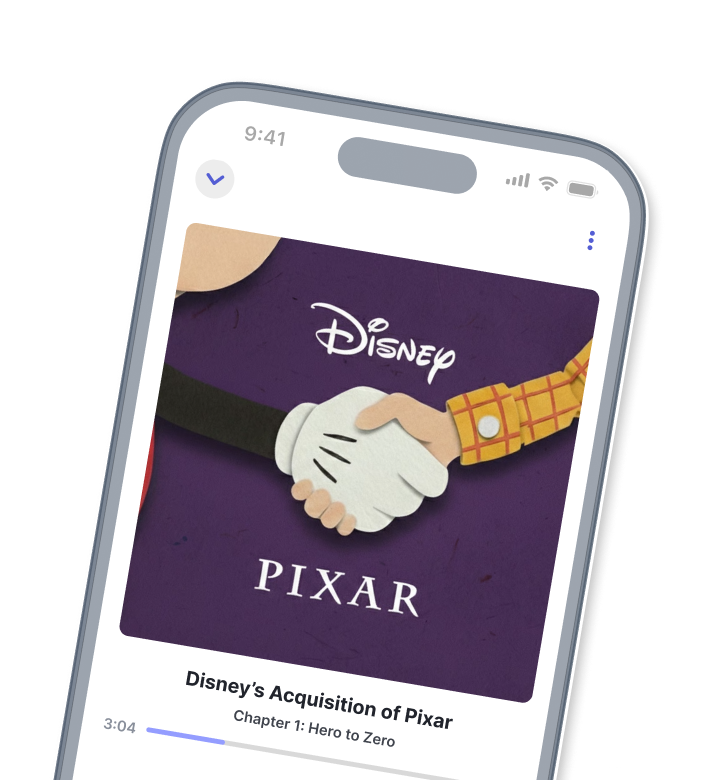
LumiQ offers structured, expert-led audio courses designed for professionals in internal audit, accounting, risk, finance, and related fields.
Key features of LumiQ courses include:
- Defined educational content and expert-led discussions
- Coverage of internal audit, risk, governance, technology, fraud, and leadership topics
- Structured assessments and automated completion tracking
- Downloadable certificates of completion
- Mobile access and offline listening options
Criteria for CIA renewal eligibility:
A LumiQ course may count toward CIA renewal if the subject matter directly relates to the holder's internal audit role or professional specialization, the course is completed entirely, the learning duration is properly documented, completion records are retained, and the hours align with The IIA's measurement guidelines.
CPD terminology and international learners:
Certificates issued to Canadian or UK learners may refer to credit hours as CPD. This designation does not prevent the course from qualifying for CIA CPE. Credential holders should assess eligible courses under The IIA's criteria as well as any applicable local professional body standards.
Course selection and ethics classification:
Not all LumiQ episodes will be relevant to every CIA holder. Additionally, courses with ethics-adjacent material should only be claimed toward the mandatory 2 ethics hours if the primary course objectives and content directly support that classification.
Compliance disclaimer:
LumiQ does not establish individual renewal requirements or provide regulatory or individualized compliance advice. The IIA serves as the final authority on all CIA certification renewal standards.
Frequently Asked Questions About CIA CPE Requirements
How many CPE hours does a practicing CIA need?
A practicing CIA needs 40 CPE hours every calendar year.
How many hours does a nonpracticing CIA need?
A nonpracticing CIA needs 20 CPE hours annually.
Does a retired CIA need CPE?
No. Retired CIAs are exempt from annual CPE and renewal requirements while they remain retired and have properly updated their status through CCMS.
How many ethics hours does a CIA need?
Practicing and nonpracticing CIAs need 2 ethics CPE hours every calendar year.
What is the CIA CPE reporting period?
The reporting period runs from 1 January through 31 December.
When does the CIA renewal window open?
Annual Certification Renewal is generally available in CCMS from 1 October through 31 December.
Does Canadian CPD count toward CIA CPE?
It may. The activity must meet The IIA’s requirements for relevance, program quality, duration, and completion evidence.
Does UK CPD count toward CIA CPE?
It may. The professional body or provider calling an activity CPD does not disqualify it. The holder must evaluate it under The IIA’s CPE policy.
Is 1 CPD hour automatically equal to 1 CIA CPE hour?
Not automatically. The IIA measures programs by actual learning time, with 50 minutes equal to 1 CPE hour. Use documented duration and The IIA’s measurement rules rather than relying only on the name of the credit.
Can the same learning count toward CIA CPE and another designation?
Potentially. It must independently satisfy the rules of The IIA and the other professional body.
Do courses need to come from The IIA?
No. The IIA recognizes qualifying programs from other professional organizations, employers, universities, industry bodies, and formal self-study providers.
Can self-study count toward CIA CPE?
Yes. Formal self-study relevant to internal auditing may count when it meets The IIA’s program criteria and provides evidence of completion.
Can podcasts count toward CIA CPE?
A structured audio course may count. An ordinary public podcast does not automatically qualify.
Can CIA CPE hours carry forward?
Surplus hours from the immediately preceding reporting period may be applied to the current requirement. A practicing CIA who earned 60 hours in the prior period may use up to 20 of the surplus hours.
What happens if I miss the 31 December deadline?
The certification moves into Grace status, and the holder may not use the CIA designation until the outstanding renewal has been completed.
Do I upload certificates during annual renewal?
Usually not. CIA renewal uses self-attestation. Certificates and supporting records must be retained in case of audit.
How long should CIA CPE records be kept?
Keep supporting documentation for at least 3 years.
Can one course count toward both CIA and CRMA?
Yes, when the subject matter is relevant to both certifications.
CIA Certification Renewal
The Institute of Internal Auditors is the final authority on CIA certification renewal and CPE compliance.
CIA holders should rely on:
- The IIA Annual Certification Renewal Policy
- CCMS renewal instructions
- current CPE requirements
- the Global Internal Audit Standards
- guidance from their national institute where applicable
Sources
Primary sources used for this page include:
- The IIA Annual Certification Renewal Policy
- The IIA CPE Requirements page
- The IIA Certification Renewal Steps
- The IIA Continuing Professional Education and CPD learning page
- The Global Internal Audit Standards
Reviewed by Danielle Marion, Regulatory Compliance Manager at LumiQ. Danielle has more than 20 years of experience in regulatory compliance and professional education governance, including leadership roles at Deloitte LLP.